
Choose from 25 Fun Things to Do in Muscat
ShowingFilter 21-25 of 25 listings.


Wadi Ghul (Oman's Grand Canyon)
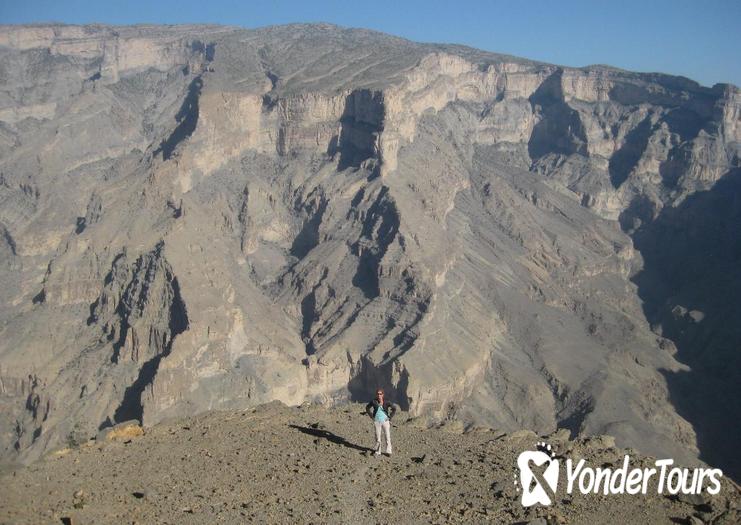
From 3,000 meters at the top of Oman’s tallest mountain, Jebel Shams, to the flat area just below the summit, you can see 1 kilometer straight down into Wadi Ghul, Oman’s Grand Canyon. From this area, called “the balcony,” the drop is so far and the canyon so vast it is hard to get a sense of scale. Rock formations and layers in the ancient rock give the canyon an almost other-worldly feel. It is the deepest canyon in the Middle East, and the second deepest in the world after Arizona’s Grand Canyon.
On the far side of the valley lies the Ghul village, a collection of traditional mud-brick homes built into the mountainside. With small plots of agriculture and date plantations, the green stands out against the orange mountains and lands. There is also an abandoned old Ghul village, where the trailhead for the trekking path begins.
Practical Info
Ghul is less than 30 kilometers from Al Hoota Cave and about 15 kilometers from Al Hamra. The trip is best made via car, and a 4x4 is required to go up the mountain. Be prepared to hike to get to the lookout area.
Address: Nizwa, Oman
From $ 130
Wadi Shab
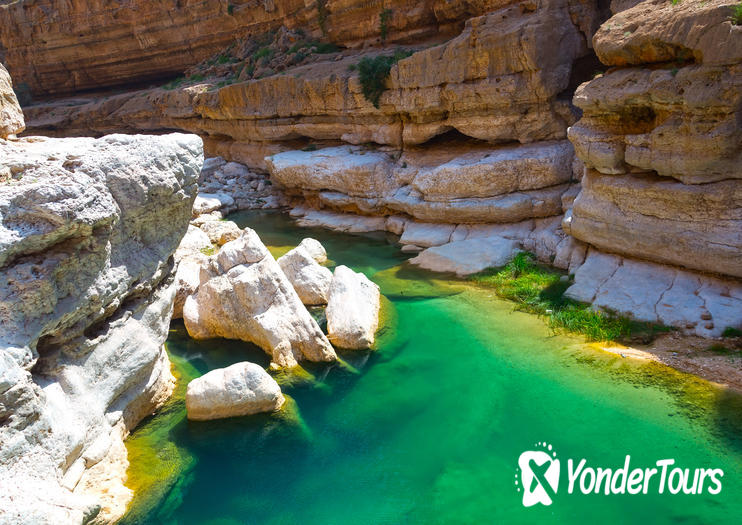
Wadi Shab is the most unspoiled, easily accessed and perhaps the most beautiful valley in Oman. Bright turquoise waters flow through tall canyon walls of orange and yellow sandstone, over rocks and into small pools and waterfalls, and a refreshing swim in the cool, clear water is a highlight for most visitors. It’s the feeling that you’ve found your own personal oasis in the middle of the desert, though the wadi is popular with both locals and tourists.
Outside of exploring the natural beauty of the emerald-green pools of water and large rock formations, there is a partially submerged cave to see. The canyon floor is dotted with lush greenery, and the area is surrounded by date plantations and banana palms. Unlike neighboring Wadi Tiwi there is no road through the valley, so progress must be made on foot.
Practical Info
To reach Wadi Shab, drive east toward Sur along the main highway. It is about 100 kilometers (a two-hour drive) from Muscat. From the main highway, exit at Tiwi and drive into Tiwi village. The entrance of Wadi Shab is at the west end of the town. Park your vehicle as close to the bridge as possible. Boats run across the water to a starting point for walks for 1 OR. It takes about two hours to hike through the whole valley.
Address: Tiwi, Oman
From $ 79
Land of Frankincense
From the height of ancient Greece and Egypt, into the Iron and Islamic Ages and through much of the 17th century, the frankincense trade thrived throughout the Arab Peninsula, North Africa, the Mediterranean, India and China. Caravans, or traveling groups of traders, would walk the Silk Road throughout these areas and form makeshift settlements close to their most valuable products; few were more lucrative to trade than frankincense.
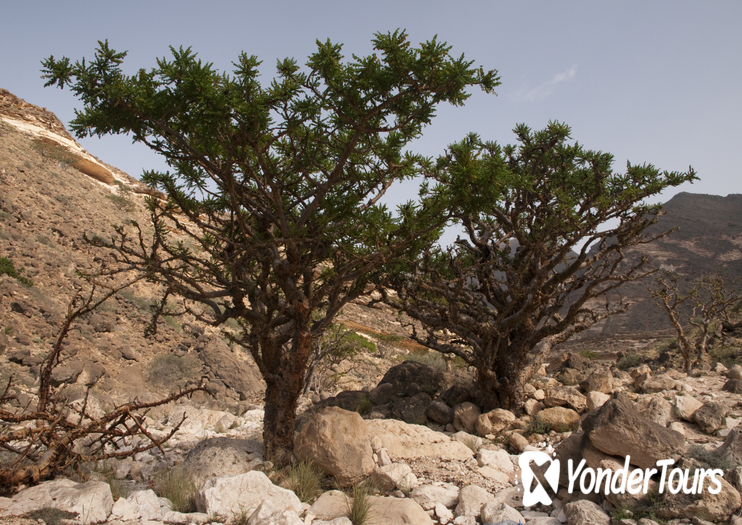
An aromatic resin used as incense in religious ceremonies and private homes, frankincense is harvested by peeling the bark from its hardy namesake tree (also known as Boswellia sacra), which can grow just about anywhere "“ even out of solid rock. Technically called olibanum, and especially sacred to Jews for its appearance in the Torah, the resin was given its more common name when Frankish Crusaders brought it back with them to Europe.
In the Dhofar province of southern Oman, the World Heritage Site is composed of the ancient frankincense trees at Wadi Dawkah, the remains of the caravan settlement of Shisr and Wubar, and the trade ports of Khor Rori and Al-Baleed, bordering the Arabian Sea. This area is one of the world's greatest sources of evidence of the culturally influential frankincense trade, and offers well-preserved examples of medieval-era Arabian architecture.
These days, frankincense remains big business in Oman, and can be purchased from dedicated tradesmen in markets all over the country.
An aromatic resin used as incense in religious ceremonies and private homes, frankincense is harvested by peeling the bark from its hardy namesake tree (also known as Boswellia sacra), which can grow just about anywhere "“ even out of solid rock. Technically called olibanum, and especially sacred to Jews for its appearance in the Torah, the resin was given its more common name when Frankish Crusaders brought it back with them to Europe.
In the Dhofar province of southern Oman, the World Heritage Site is composed of the ancient frankincense trees at Wadi Dawkah, the remains of the caravan settlement of Shisr and Wubar, and the trade ports of Khor Rori and Al-Baleed, bordering the Arabian Sea. This area is one of the world's greatest sources of evidence of the culturally influential frankincense trade, and offers well-preserved examples of medieval-era Arabian architecture.
These days, frankincense remains big business in Oman, and can be purchased from dedicated tradesmen in markets all over the country.
Address: Oman
From $ 68
Ruwi
Ruwi is one of three towns or districts that make up the Muscat area. It is considered the commercial hub and main business district of the capital. With its neon lights, many shops and busy streets, Ruwi has an urban feel that is pulsing with energy. At the same time, there are still many older structures and narrow alleys that maintain the town's traditional feel. Although many were demolished in the last 40 years to make way for commercial spots, the historical buildings that still stand are some of the oldest in the country.
On the southeastern side of the district you'll find Muscat's Little India and Souq Ruwi Street with dozens of colorful shops and local eateries. The many banks and business headquarters can be found on the western side. Ruwi High Street is the main commercial avenue with a variety of shopping options.
Practical Info
Ruwi is located about 3 kilometers inland from Muttrah and about 5 kilometers from the main residential localities of Al-Khuwair and Al-Qurm.
Address: Ruwi, Oman
From $ 68
Qurum Beach
The most popular beach lining the coast of Oman, Qurum Beach is known for its soft golden sands, water activities, and restaurant scene. It is popular with families and active visitors with its long, flat paths for walking and jogging. Walking in the sand is also possible at low tide. Several beachside hotels are located on the beach, so many facilities as well as coffee shops, snack bars, shops, and cafes are available here. Many restaurants face the water and enjoy scenic views of the ocean.
The long stretch of sand sits next to the Qurum nature reserve, so the area keeps its natural feel. In addition to relaxing in the sun and sand, water sports such as beach volleyball, kite surfing, and swimming are popular here. Locals often come to this beach to make BBQ dinners, play soccer, and enjoy the evening ocean breezes.
Practical Info
Qurum Beach is located 20 minutes from the Muscat International Airport. Shower, BBQ and parking facilities are available. Conservative swimwear is encouraged.
Address: Muscat, Oman
From $ 68